The text on the site is translated into English, errors are possible. Sorry...

Dragoon soldier’s and officer’s shashka, sword model 1881 and 1881/1909

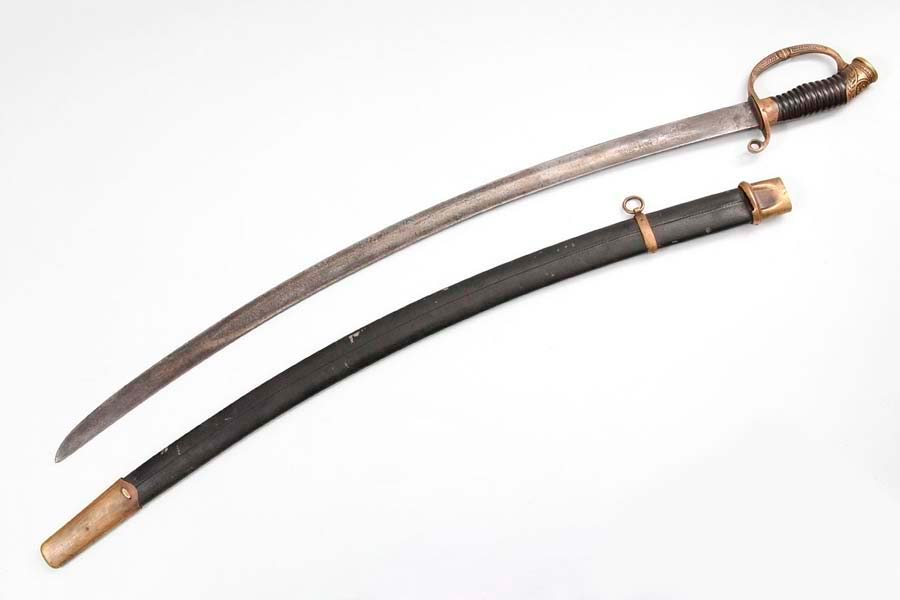
Imperial russian Dragoon soldier’s shashka sample 1881 for sale it.
The blade shashka is steel, slight curvature, single-edged, with one wide fuller. The combat end is double-edged. The hilt consists of a handle with a head and a brass guard. The handle is wooden, with longitudinal inclined grooves.


At the top of the handle there is a figured brass bushing, on top of which there is an oval convex head. At the bottom of the handle is a brass bushing. The guard is formed by the front bow, extending from the upper part of the handle and smoothly passing into the cross. The end of the cross has a hole, slightly bent down and rounded.
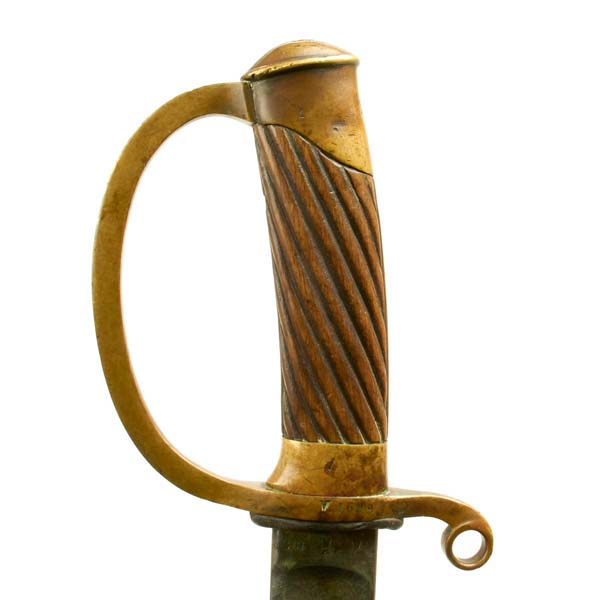
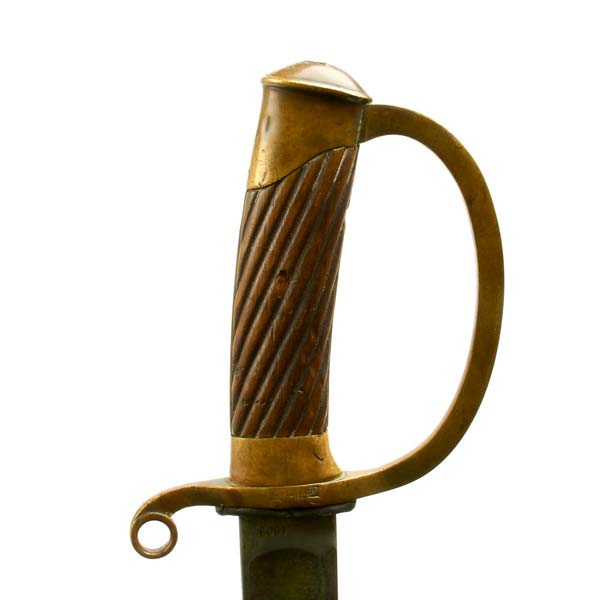
The scabbard is wooden, covered with leather (in 1891-1901, scabbards covered with rubber were also made for the cavalry). In 1881-1888. the scabbard was made with a block for inserting a bayonet. The brass device of such a scabbard was formed from the mouth, two nuts (the lower one with a triangular bracket for the belt strap) and the tip. In 1888, instead of blocks, two nuts with bayonet sockets were added to the scabbard. Usually, only soldiers’ shashka in dragoon regiments had scabbards with devices for carrying bayonets. In 1891, the triangular clip on the nut was replaced by a ring.


In 1881, the checker\shashka replaced the cavalry and dragoon sabers and cuirassier broadswords for all the lower ranks, who were entitled to these weapons. However, in 1882, broadswords and sabers were left for some guards cavalry units to wear in peacetime in full dress. The shashka was used after 1917.
Dragoon officer checker\shashka sample 1881
The blade is steel, slight curvature, single-edged, with one wide fuller or two narrow lobes at the butt and a wide fuller. The combat end is double-edged. Arbitrary blades were also common. Blades for officers often had beautifully designed etching and decorations or were personalized.

The hilt consists of a handle with a head and a brass guard. The handle is wooden, with longitudinal inclined grooves. The main difference from a soldier’s checker is in the top of the handle. In the officer’s version, the head of the handle comes with a separate button, in the soldier’s it is one-piece and in the form of a mushroom cap.
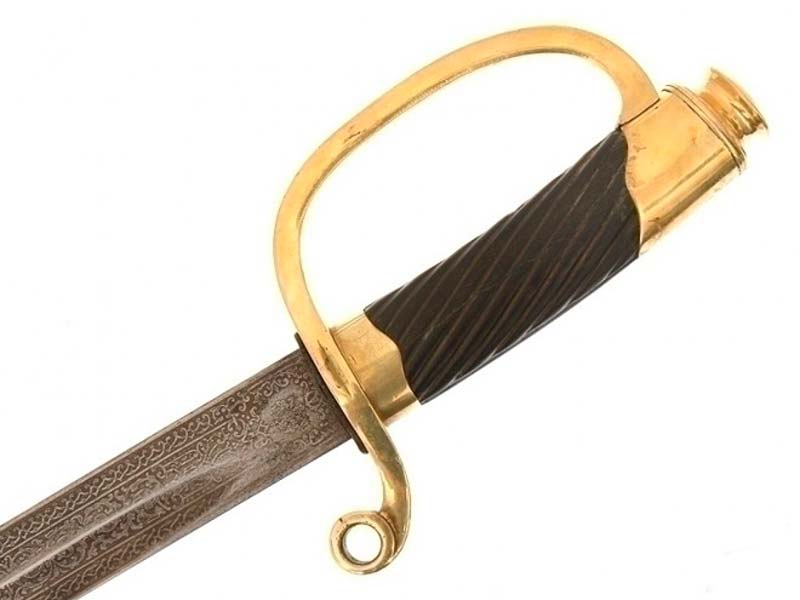
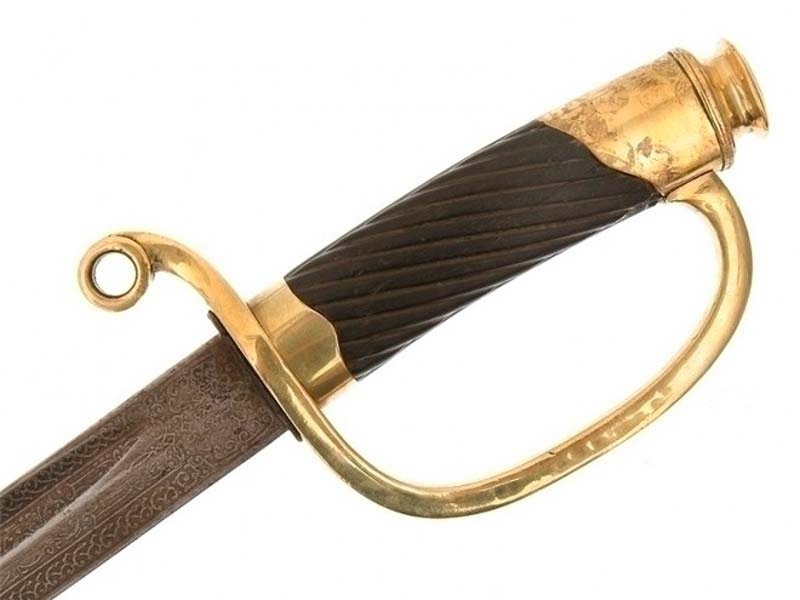
Wooden scabbard covered with leather. In the 1890s rubber-covered scabbards were also made. The brass device consists of a mouth, a nut and a tip. There is a bracket on the mouth on the inside, and a ring on the nut. Since 1888, a special recess was made at the mouth for the bracket.
In 1881, the shashka replaced cavalry, dragoon and infantry sabers, as well as cuirassier broadswords for all officers and generals who were entitled to them. However, in 1882, broadswords and sabers were left to four guards cuirassier regiments and two guards hussars, respectively, to be worn in peacetime in full dress.
Dragoon officer’s shashka model 1881/1909 imperial russian
Blade steel curved single-edged, often with three narrow and one wide fuller. On such blades, as a rule, a double-headed eagle and the cypher of Emperor Nicholas II – H II were depicted by etching. Arbitrary blades were also common.

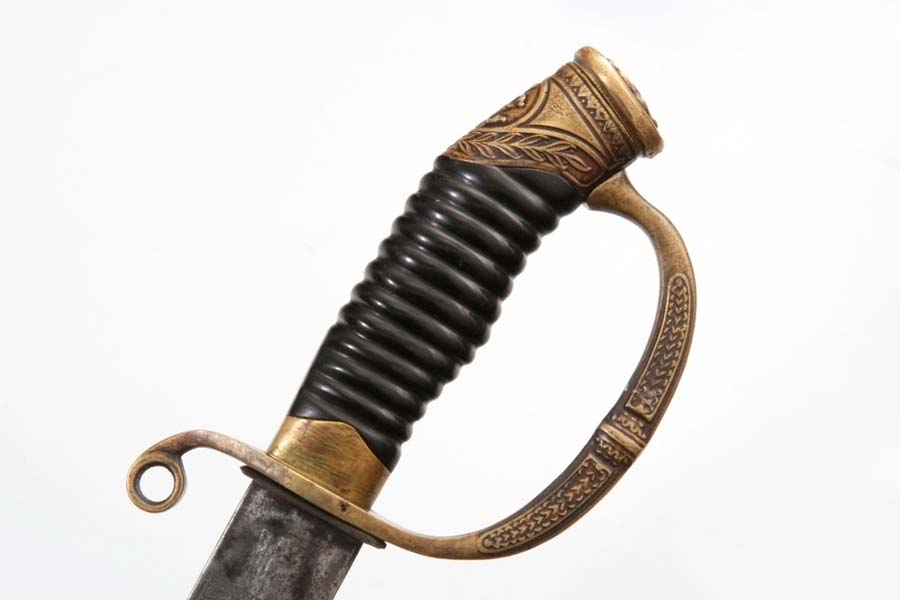
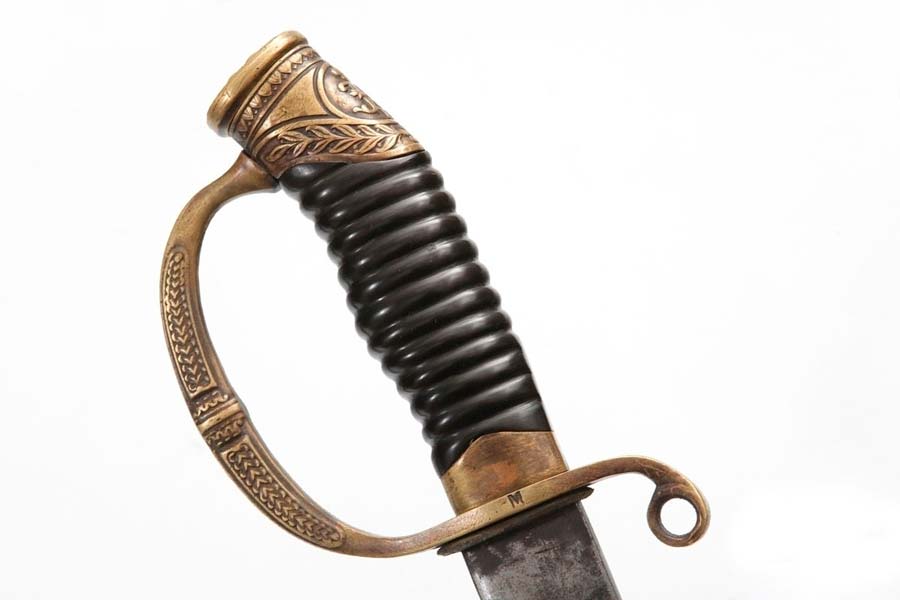
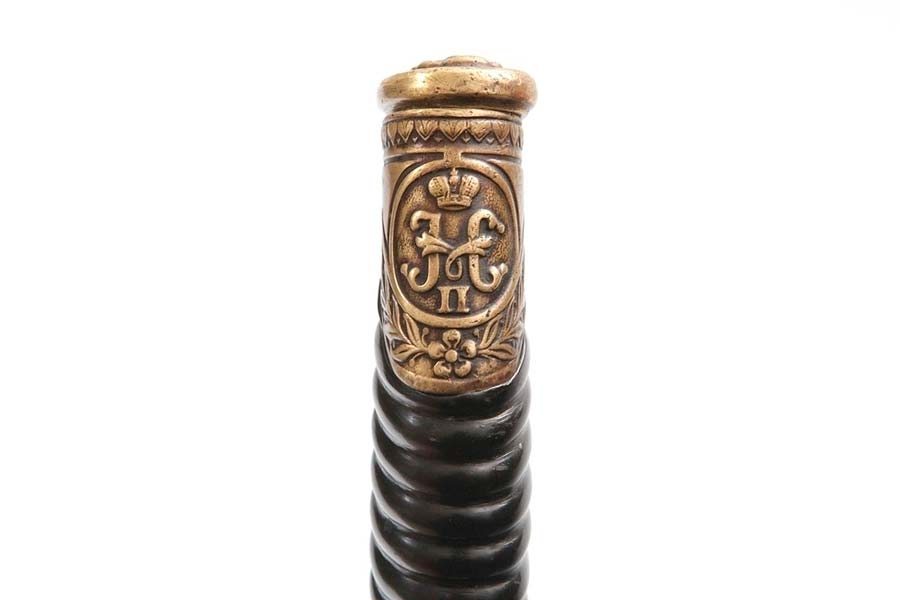
The hilt consists of a handle with a head and a brass guard. The handle is wooden, sometimes ebonite, with transverse deep grooves and a thickening in the middle part. At the top of the handle there is a figured brass bushing, on top of which there is an oval head in the form of a rosette. The sleeve is decorated with floral ornaments and the Emperor’s cypher, during whose reign the owner of the weapon received his first officer rank.
During the period of the Provisional Government shashka arr. 1881/1909 were made without a monogram on the upper sleeve of the handle. At the bottom of the handle is a brass bushing. The guard is formed by the front bow, extending from the upper part of the handle and smoothly passing into the cross. The end of the cross has a hole, slightly bent down and rounded. Wooden scabbard covered with leather. The brass device consists of a mouth, a nut and a tip. There is a bracket on the mouth on the inside, and a ring on the nut. The saber was in service with all those officers and generals who had previously used the dragoon saber arr. 1881 Used after 1917
At the beginning of the XIX century. in order to increase the number of handguns produced and improve their quality, it was decided to unload the Tula, Sestroretsk and Izhevsk arms factories from the production of edged weapons by building a special factory for this at the Zlatoust iron foundry in the Urals.
The project of the factory was developed in 1811, but the war with Napoleon prevented its implementation, and the Zlatoust cold steel factory was built and put into operation only in 1816-1817. The main reason for the construction of the weapons factory in Zlatoust was the presence of a good metallurgical base, which was the Zlatoust iron foundry and ironworks, founded in 1754.
The factory was supposed to produce all types of bladed weapons that were in service, as well as fulfill special orders for the manufacture of decorated weapons.
The weapons factory produced a variety of types of combat, fencing and hunting weapons: sabers, broadswords, shashka, swords, cleavers, daggers, daggers, pikes, espadrons and knives. From 1839 to 1860, cuirasses were also produced here. By the beginning of the XX century. the production of edged weapons was increased to 42 thousand units per year.
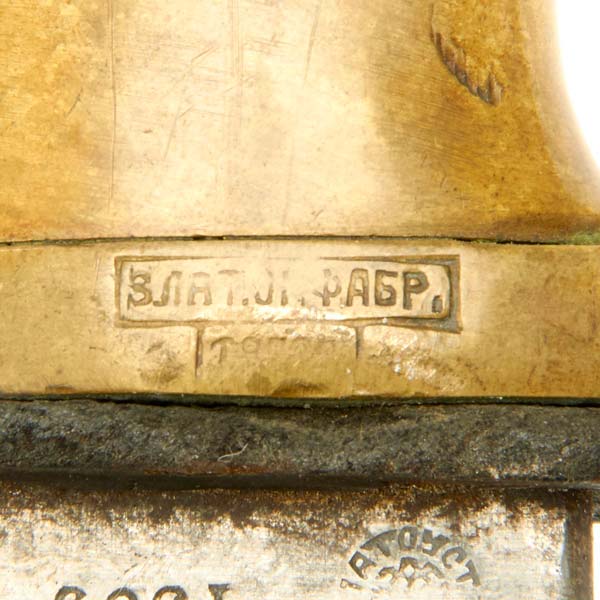
Zlatoust edged weapons had high fighting qualities and were known not only in Russia, but also abroad. It was exhibited at many World Exhibitions and repeatedly won the highest awards. The Zlatoust Arms Factory was one of the best industrial enterprises in Russia in terms of production organization. After 1917, the Arms Factory became one of the workshops of the Zlatoust Mechanical Plant (now JSC Bulat). The last mass batch of edged weapons at the former weapons factory was made in 1945 for the Victory Parade.